The Starter system without the battery and solar panel — for sites that already have power sorted.
Internet subscription is not included — you supply your own line.
| 1× SAPS Hub network unit | enclosure |
| 1× MikroTik networking hardware | routing |
| 1× TP-Link EAP110-Outdoor | access point |
| Network & MikroTik configuration | service |
| Hotspot, bandwidth & power integration | service |
Excludes internet subscription, delivery and installation. Each is quoted separately.
A lot of people already have an inverter, a solar system, a generator or a power station sitting at the site. Making them buy another one is waste. This is the same Starter system — same enclosure, same router, same access point, same configuration — with the backup battery and solar panel left out.
The hardware and the setup work that makes it a network.
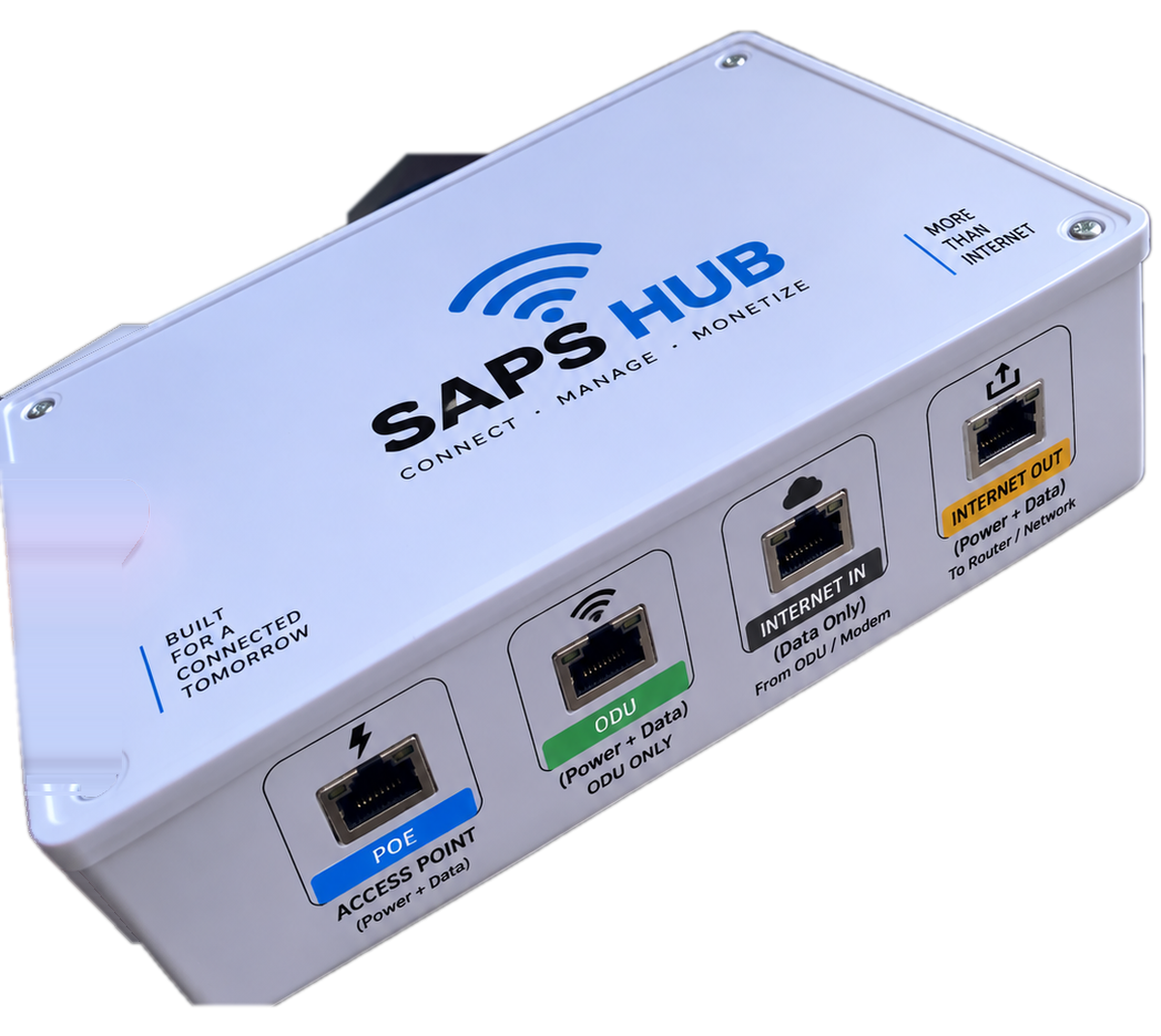
A compact enclosure holding the networking hardware with the power and network distribution already integrated.
Routes your internet connection and enforces the rules about how much any one person can take.
An outdoor-rated access point that broadcasts the network. or a confirmed equivalent Omada outdoor access point — the final model is confirmed before dispatch.
Network configuration, MikroTik configuration, hotspot setup, bandwidth management and power integration — done before the kit reaches you.
The system is tested before dispatch, and you get guidance on deploying it at your site.
Backup power and solar. No battery, power station or solar panel is included in this version. You supply your own. The unit expects a DC supply — tell us what you have and we will confirm it is compatible before dispatch.
Internet subscription. This is a bring-your-own-internet system. Starlink, an MTN or Airtel ODU, fibre, or any compatible Ethernet-based source will work. Your internet source determines the available WAN bandwidth; SAPS Hub manages and distributes that connection.
Delivery and installation. Both are quoted separately once we know where the kit is going and what the site needs.
Mounting poles, extra cabling and additional access points if your site turns out to need them.
Typical planning range: approximately 100–200 metres outdoors in favourable open conditions.
Actual Wi-Fi coverage varies depending on mounting height, walls, building materials, interference, terrain, access-point orientation and client devices. Indoor and multi-building coverage can be significantly different from open outdoor range.
For buildings, a real deployment may need additional access points. That is normal, not a fault — concrete and distance are what they are.
The number of users a deployment can support depends on the access point, your internet bandwidth, what people are doing, the RF environment and the network configuration.
Thirty people checking WhatsApp and reading pages is a very different load from thirty people streaming video in the evening. The first is comfortable on a modest line; the second will feel slow on the same line no matter whose equipment you buy.
This is designed to be expanded. Access points can be added as demand grows.
We do not guarantee a Wi-Fi range, a user count, an internet speed, a profit, a return on investment, or 24/7 solar operation. Anyone who does is guessing on your behalf.
Runtime on backup power depends on the connected equipment, your internet source, network traffic, battery state, solar availability, weather and conversion losses. A site assessment is the only way to get real numbers for your site.
There are five SAPS Hub systems, from the bare enclosure up to a full kit with solar.
Compare them all Ask us firstPay securely through Paystack. You get an order number immediately.
Your card details go to Paystack, never to us. Keep your order number — you can check your order at any time.